Related: Refractor vs Reflector Telescope: Which Design Should You Buy?
Well, the marketing says "universal," "high-precision," "crisp images every time." I've been testing phone adapters for about four years now, ever since I realized half the people at my outreach events were more interested in photographing the moon than drawing it.
I've owned six different adapters, used them on everything from my 80mm grab-and-go refractor to the 12-inch Dob, and I can tell you the truth: most of them are plastic junk that crushes your eyepiece or wobbles so badly you can't focus.
A couple of them are genuinely good. Here's what I've learned living with these things.
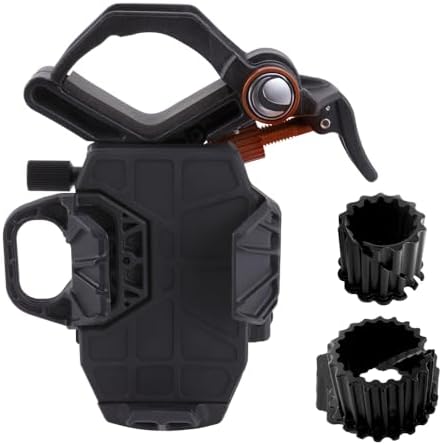
Celestron NexYZ 3-Axis Phone Adapter for Precise Telescope Imaging
Three-axis adjustment means you actually center the phone over the eyepiece, which fixes the...
Visit on Amazon →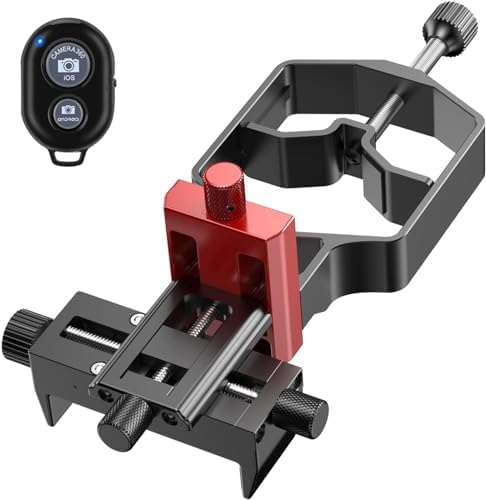
tridaptor - Universal Phone Scope Digiscoping Adapter|High-Precision XYZ Metal Telescope Mount 3-Axis Smartphone Holder for Spotting Scope Monocular Binos|Fits All Cell Phone Camera/Max 2.4" Eyepiece
3-axis XYZ metal mount with high-precision adjustment for accurate alignment.
Visit on Amazon →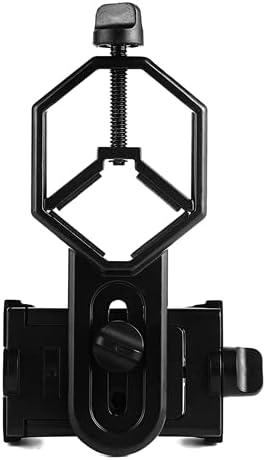
SVBONY Universal Cell Phone Adapter, Telescope Phone Mount Diameter 25-48mm
Cheap, simple, works for a basic moon shot.
Visit on Amazon →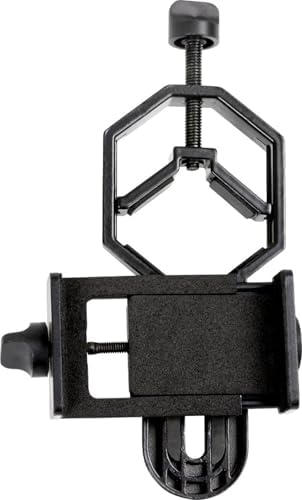
Celestron Basic Telescope Eyepiece Smartphone Adapter
The cheapest way to try phone astronomy.
Visit on Amazon →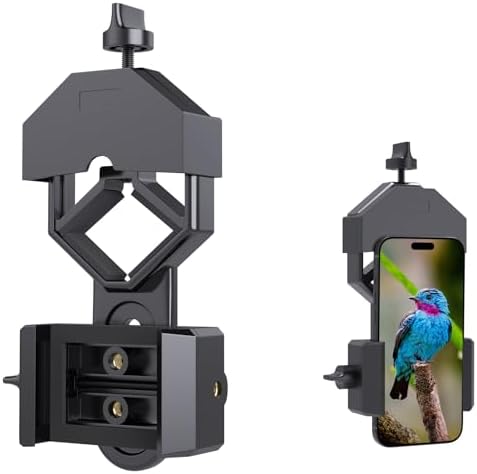
GOSKY Spotting Scope Phone Adapter for Binoculars & Monoculars
For binoculars and monoculars, it's a good fit.
Visit on Amazon →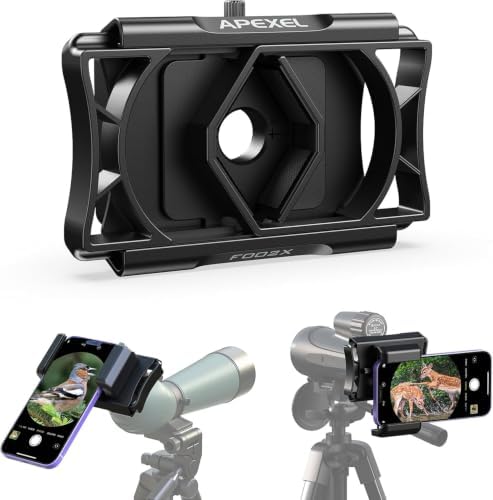
Telescope Phone Adapter, Upgraded Rotatable 360° Binocular Photo Adapter for Android & iPhone,Smartphone Holder Mount for Telescope,Monocular,Binocular,Spotting Scope,Microscope with Bluetooth Shutter
The 360-degree rotation is nice for framing.
Visit on Amazon →How I test these things
My method is simple. I mount the adapter on my 80mm refractor, aim at the moon, and try to take a picture without touching the focus knob. Then I try Jupiter. Then I hand it to a visitor at my observatory and see if they can figure it out in under two minutes. The adapter that fails the beginner test fails the review.
The problem with all of them
The phone is heavy. Your phone weighs about 200 grams. The eyepiece sticks out maybe 30 millimeters. That's a lever arm, and the weight throws off the balance of the whole telescope. Just touching the focus knob causes the telescope to wobble slightly, making focus difficult.
That's physics, not bad engineering. The best adapter minimizes the use by keeping the phone close to the eyepiece and centered.
The worst ones let the phone hang off at an angle like a flag in the wind.
Celestron NexYZ 3-Axis Phone Adapter
The NexYZ is the one I grab when I actually want a picture that looks like something. I've owned mine for 14 months, and it has survived being dropped on concrete, left out in a light drizzle, and stuffed into a backpack with my eyepieces.
The three-axis adjustment is not a gimmick. You slide the phone in, then use two dials to center the camera lens exactly over the eyepiece.
That centering is what fixes the balance problem. When the phone is centered, the weight is directly over the eyepiece, and the wobble drops by half.
The downside is the price. At ~$45, it costs more than some finder scopes. And the adjustment dials are small, so in the dark with gloves on, you'll fumble. But the build quality is excellent. The clamp grips the eyepiece with rubber pads, so it won't scratch your 9mm.
I've used it with a 25mm, a 9mm, and a Barlow, and it holds all of them. One owner on a forum said it made his "phone pictures look like they came from a real camera." That's a bit strong, but I understand the sentiment.
Choose the NexYZ if you want the best chance of a sharp photo and you're willing to pay for it. It's the one I'd hand to someone who's serious about learning.
tridaptor Universal Phone Scope Digiscoping Adapter
I bought this one on a whim because a friend was raving about it. The tridaptor is metal, which surprised me at the price point. It clamps onto the eyepiece with a spring-loaded mechanism, and the phone sits in a cradle that grips the edges. The metal construction means it doesn't flex when you tighten it. That's rare at this price.
The problem is the centering. There's no fine adjustment. You slide the phone around until the camera lines up with the eyepiece, then you tighten the clamp and hope it stays. It usually does, but it takes a couple of tries.
And the spring-loaded clamp, while sturdy, can pinch your phone case if you're not careful. I've got a thin case on my phone and it worked fine.
My wife's phone with a thicker case was a struggle.
For the moon, it works. I got a decent shot of the terminator with the 20mm eyepiece, craters and mare clearly visible. For planets, you'll need the 9mm and a steady hand. It's a solid choice if you want metal and don't mind the fiddly centering.
SVBONY Universal Cell Phone Adapter
The SVBONY is the one I recommend when someone says "I just want to try it." It's ~$16, it clamps onto the eyepiece with a simple screw mechanism, and the phone sits in a plastic cradle. It works. I've used it for a year, and it's still in one piece. The moon looks glorious through it. The craters pop.
But the plastic thumbscrews are the weak link. If you overtighten them, they strip. I've read several complaints about that. The grip is basic, so if you have a large phone, it might not hold securely.
And the single-axis adjustment means you'll spend time sliding the phone around to center the camera.
It's not a precision instrument. It's a ~$16 tool that does one thing: lets you take a quick picture of the moon through your eyepiece.
For the price, you can't go wrong. But don't expect to photograph Jupiter's bands with it. You won't.
Celestron Basic Telescope Eyepiece Smartphone Adapter
This is the adapter I bought first, because it was the cheapest Celestron option. It's ~$15, and it shows. The clamp is plastic, the adjustment is a single screw, and the phone sits at an angle that throws off the balance.
I used it exactly twice before I bought something better. The focus wobble was so bad I couldn't get a sharp image at any magnification.
One reviewer called it "frustrating but functional." I'd say it's functional if you have the patience of a saint.
The only reason to buy this one is if you want to spend the absolute minimum to see if phone astronomy is for you. If you know you want to do this regularly, skip it and get the NexYZ.
GOSKY Spotting Scope Phone Adapter
The GOSKY is designed for spotting scopes and binoculars, but it works on telescopes with a narrow eyepiece. The clamp is metal, and the phone cradle is adjustable. I used it on my 80mm refractor with the 25mm eyepiece, and it held steady enough for a moon shot.
The problem is the clamp maxes out at a certain eyepiece diameter. My 9mm with the Barlow was too thick, so I couldn't use it at high power.
If you're looking for an adapter for binoculars, this is a good pick. For telescopes, it's a niche tool. I'd skip it unless you have a spotting scope too.
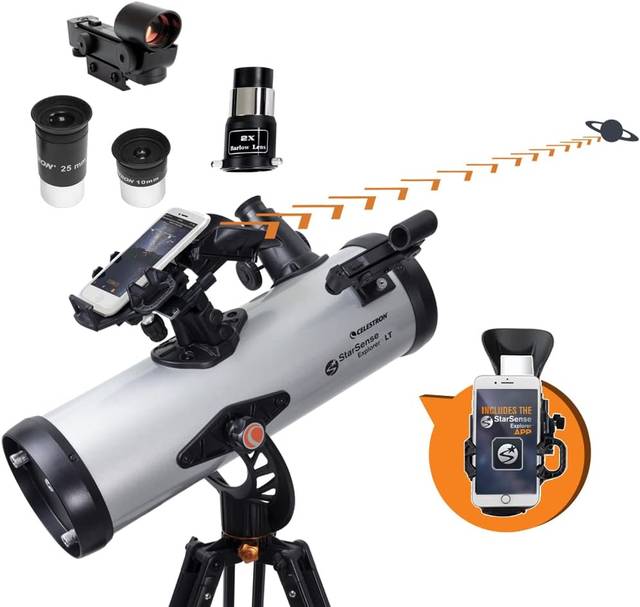
Telescope Phone Adapter, Upgraded Rotatable 360°
This one is a mixed bag. The 360-degree rotation is genuinely useful for framing landscape shots during the day. I used it for some daytime birdwatching, and the rotation made it easy to get the angle right. The price is reasonable at ~$22.
 Visit on Amazon →
But the plastic body flexes when you tighten the clamp. I noticed the focus wobble got worse the tighter I screwed it. And the phone cradle is a bit shallow, so my phone felt like it could slip out. I've had it for a few months, and it lives in a drawer now. It's not terrible, but it's not great.
Visit on Amazon →
But the plastic body flexes when you tighten the clamp. I noticed the focus wobble got worse the tighter I screwed it. And the phone cradle is a bit shallow, so my phone felt like it could slip out. I've had it for a few months, and it lives in a drawer now. It's not terrible, but it's not great.
What I actually recommend
I don't track prices day to day, so I won't pretend to know next week's. But here's the honest bottom line. If you want a quick, cheap way to share what you see with your family, the SVBONY at ~$16 is a no-brainer.
It's not perfect, but it's good enough. If you're serious about getting a sharp photo of the moon or a planet, spend the money on the Celestron NexYZ.
It's the difference between a photo you'll show people and a photo you'll delete.
The phone adapter is a blessing and a curse. It's the best feature for a lot of beginners, but you lose some magnification when using the phone, and the weight of the phone can throw off the balance. Just touching the focus knob causes the telescope to wobble slightly. Know that going in, and you'll be fine.
I've got several expensive, bigger telescopes, and I still grab my 80mm refractor with the SVBONY for outreach events. The public yearns to look through an eyepiece, and a phone picture is the next best thing. A tablet screen doesn't do it. But a phone picture of the moon that you took yourself? That's the hook. That's how we get people to look up.