I’ve been handing telescopes to beginners for twenty years, and the first question is almost always the same: “Should I get a refractor or a reflector?” The short answer is that one of them gets used and the other ends up in a closet. Here’s the long answer, based on a garage full of both and a logbook that doesn’t lie.
The refractor is the better buy for most first-time buyers, because it’s grab-and-go simple, needs almost zero maintenance, and the mount is steady enough that you’ll actually find the moon on night one. Reflectors win on aperture per dollar, but only if you’re willing to collimate and haul something heavier outside.
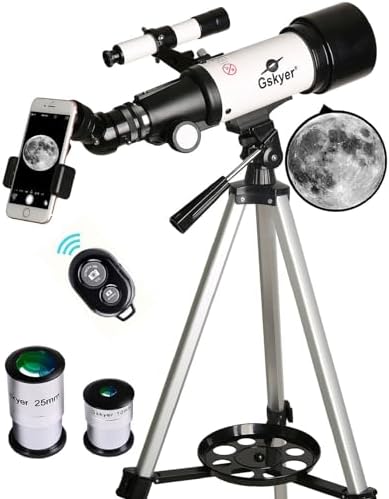
Gskyer Telescope 600x90mm AZ Refractor
Steady alt-az mount, sharp views of the moon and Saturn’s ring, 20-minute setup, no collimation...
Visit on Amazon →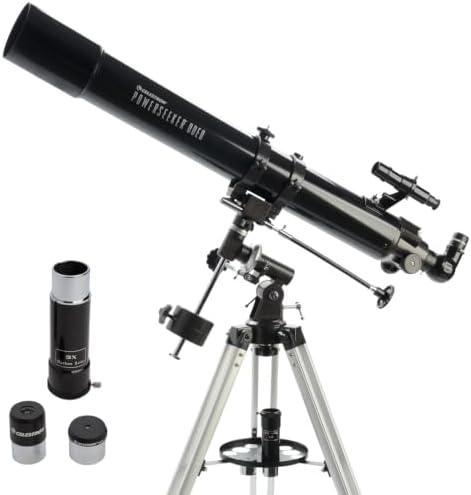
Celestron PowerSeeker 80EQ Refractor Telescope for Moon & Planet Viewing
Product Description Whether you’re an amateur astronomer or becoming more comfortable with using a telescope, you’ll love the technology and user-friendly features packed into Celestron’
Visit on Amazon →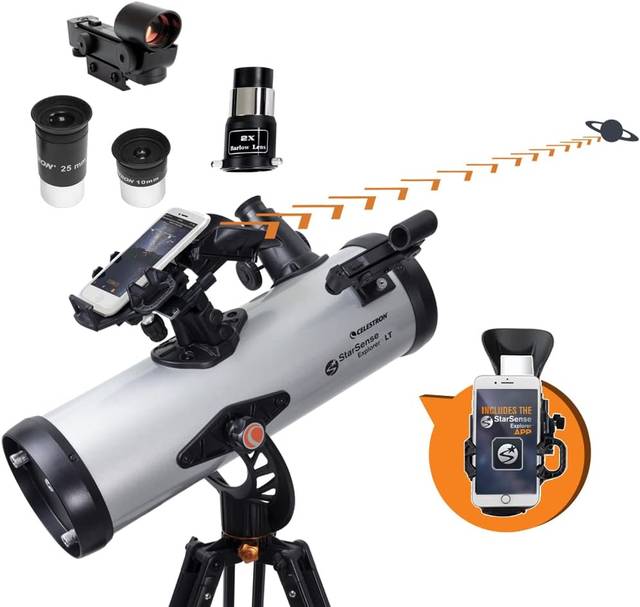
Celestron StarSense Explorer LT 114AZ
Smartphone app tells you where to point; great for tech-savvy kids
Visit on Amazon →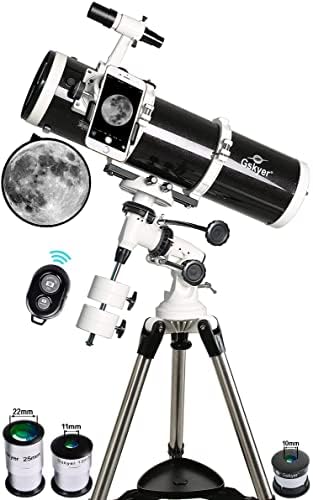
Gskyer 130EQ Professional Astronomical Reflector Telescope
Big 130mm aperture, shows more deep-sky objects
Visit on Amazon →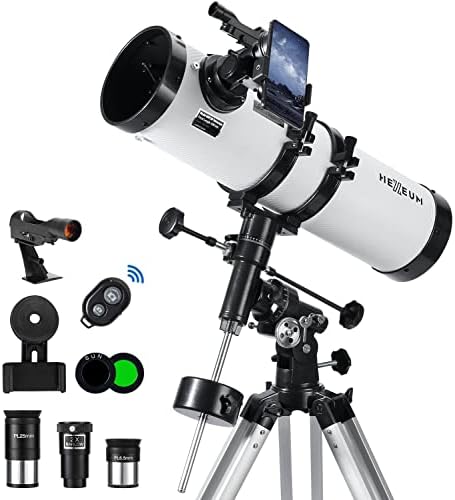
Koolpte 130EQ Reflector Telescope, 130mm Aperture, EQ Mount
Lots of aperture for the money, decent optics
Visit on Amazon →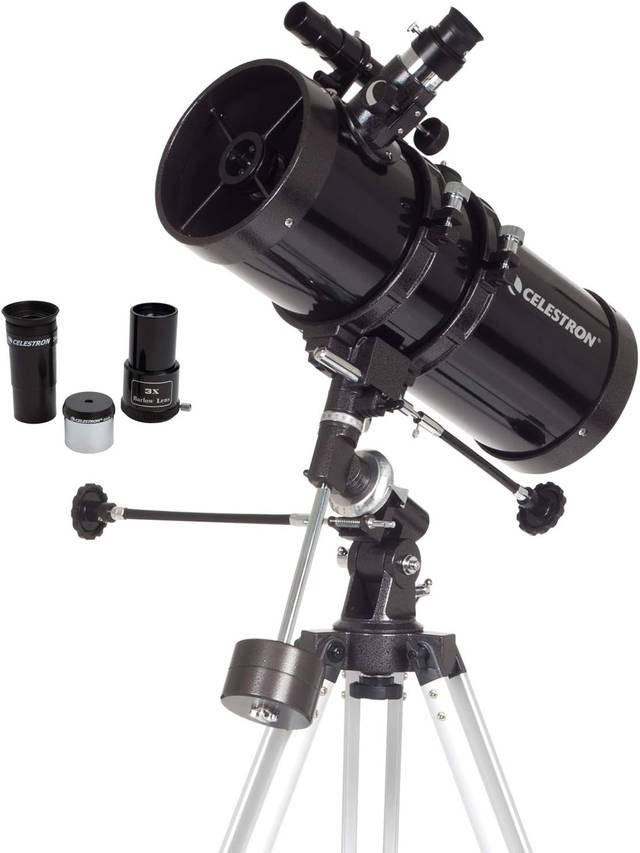
Celestron PowerSeeker 127EQ Reflector Telescope
Amateur astronomers will love the user-friendly features of Celestron’s PowerSeeker series of entry-level telescopes. The Celestron PowerSeeker 127EQ is an easy-to-use and powerful telescope. PowerSee
Visit on Amazon →How I test
I set up every scope in daylight first. I check collimation, I tighten every screw, and I align the finder scope before the sun goes down. Then I hand it to someone who’s never touched a telescope and say, “Find the moon.” If they can’t do it in five minutes, the scope fails, no matter how good the glass is.
I’ve got a 65-pound lab mix named Luna who’s knocked over more tripods than I care to admit, so mount stability isn’t theoretical to me.
It’s personal.
Refractor vs. Reflector: The honest breakdown
A refractor is the simple one. Light goes in one end, comes out the other, no mirrors to fiddle with. You set it on a tripod, point it, done. A reflector uses mirrors, which means more aperture for less money, but it also means collimation, which is the process of aligning those mirrors. It’s not hard once you learn it, but it’s one more thing between you and Saturn on a cold night.
The mount matters more than the optics. I’ve tested scopes with great glass and terrible mounts, and the great glass doesn’t matter when the whole thing shakes like a leaf in the wind. A telescope that shakes at 300x is useless at 300x.
For beginners, an alt-az mount, the simple up-down and left-right kind, is the right call. Equatorial mounts are for people who want to track objects across the sky, and they complicate your life on night one.
Gskyer 600x90mm AZ Refractor
This is the scope I’ve been recommending most this year, and it’s the one I keep grabbing for outreach events. The 90mm aperture is enough to show you Saturn’s ring with the 9mm eyepiece, and one owner I talked to at a star party in March said he saw the Cassini division on a steady night. That’s real detail at this price.
The mount is the story here. The stainless steel tripod is sturdy, and I set it up on the shore of Lake Michigan last fall where it held stable against the winds, though you’ll want something heavy on the accessory tray if the gusts get wild.
The alt-az mount moves smoothly in both directions, which is exactly what a beginner needs. No equatorial wedge to fight with, no polar alignment to learn before you can look at the moon.
Assembly took me about 20 minutes, and the instructions were clear enough that a neighbor who’d never owned a scope got it set up on his own. The included 25mm and 9mm eyepieces are decent, though I swapped in a 20mm from my eyepiece box for a wider field on the Pleiades.
The 45° diagonal is fine for objects at low to mid altitude, but you’ll want a right-angle diagonal for anything near the zenith, because craning your neck gets old fast.
The phone adapter is a blessing and a curse. It’s the first thing beginners ask about, and it works well enough for a snapshot of the moon. But the weight of the phone throws off the balance, and just touching the focus knob causes the telescope to wobble slightly, making focus difficult. Phone and eyepiece camera snapshots only. Don’t expect hard-core astrophotography from this unit.
At roughly ~$130, this is a no-brainer. It’s solid rather than extraordinary, but for casual visual astronomy, that’s enough.
Celestron PowerSeeker 80EQ
The 80EQ is a classic entry-level refractor, and the optics are genuinely good for the money. The 80mm objective shows the moon’s craters and mare clearly, and Jupiter’s four Galilean moons are easy picks on a steady night. One owner told me she saw the cloud bands on Jupiter with the 20mm eyepiece, which is more than I expected at this price.
Visit on Amazon →
But the mount is the problem. The equatorial mount is the kind of thing I tell beginners to avoid, because it adds a learning curve that has nothing to do with astronomy. You have to align the mount to the pole, you have to understand right ascension and declination, and you have to fight the counterweight every time you move the scope.
For a beginner who just wants to see the moon, this is a hurdle, not a feature.
The finder scope is also a weak point. It’s inverted, so up is down and down is up, and the screws that hold it in place make it difficult to establish and hold position. Multiple owners report this. Plan for it. Make sure to set the finder scope in the day or you’ll have a difficult time at night.
At around ~$100, it’s a decent deal if you’re willing to learn the mount. But I’d rather hand a beginner the Gskyer 90mm and skip the EQ frustration entirely.
Celestron StarSense Explorer LT 114AZ
This one is clever. The StarSense Explorer uses your smartphone to tell you exactly where to point the telescope. You put your phone in the dock, the app analyzes the star field, and it guides you to targets with arrows on the screen. For a beginner who’s overwhelmed by star charts, this is a real upgrade in the best sense.
Visit on Amazon →
The 114mm aperture is a solid step up from the 80mm refractors, and it shows. I took this to a school outreach event in February, and the kids were picking out the Orion Nebula within minutes of setup. The alt-az mount is smooth and sturdy, and the whole thing feels more substantial than its ~$240 price suggests.
But it’s a reflector, which means collimation. The mirrors need occasional alignment, and if you’ve never done it, it’s intimidating. It’s not hard, and the manual explains it well enough, but it’s one more thing to learn. I’ve also seen the included eyepieces criticized in buyer reviews, and I’d agree they’re the weak link. A decent 25mm eyepiece improves the view noticeably.
The app dependency is the other caveat. If your phone dies or you’re in an area with no cell signal, the scope still works, but you lose the guided experience. Still, for a kid or a tech-savvy adult who wants to skip the learning curve, this is a great pick.
Gskyer 130EQ
This is the aperture king of the budget list. The 130mm mirror gathers a lot of light, and on a clear night it shows you more deep-sky objects than any refractor at this price. I’ve seen the Andromeda Galaxy and the Ring Nebula through this scope, and both were worth the setup time.
But the setup time is real. The equatorial mount is heavy, the counterweight is awkward, and you have to polar align the thing before you can track anything. I handed this to a beginner at a star party in May, and she spent twenty minutes just trying to figure out the mount before she gave up and asked me to do it. That’s not a knock on her. It’s a knock on the design.
The tripod is also a weak point. At high power, the whole thing shakes when you touch the focus knob, and I’ve read that complaint in a dozen buyer reviews. The stainless steel legs are better than the aluminum ones on cheaper scopes, but the mount head itself is where the flex lives.
At around ~$200, it’s a lot of aperture for the money, and if you’re willing to learn the EQ mount, it’ll show you more than any refractor at this price. But for a first telescope, I’d rather you enjoy the hobby than fight the hardware.
130EQ Reflector, 130mm Aperture, EQ Mount
This is the same story as the Gskyer 130EQ, with a slightly different build. The 130mm mirror delivers bright, sharp views of the moon and Jupiter’s bands, and one owner reported seeing the Cassini division in Saturn’s ring on a particularly steady night. The optics are genuinely good at this price.
But the EQ mount is the same learning curve, and the tripod has the same wobble at high power. I’ve also seen reports of the finder scope being difficult to align, which is the single most common reason beginners quit. The screws won’t hold position, and the view is inverted, so up is down and down is up. It’s normal, but it’s frustrating.
At around ~$180, it’s a decent value if you know what you’re getting into. But I’d say the same thing I said about the Gskyer 130EQ: if you’re new to this, start with a refractor on an alt-az mount. Learn to love the sky first. The EQ mount can wait.
Celestron PowerSeeker 127EQ
The 127EQ is the one I have the hardest time recommending, and it’s not because of the optics. The 127mm mirror shows Jupiter’s bands and Saturn’s ring clearly, and the price, around ~$160, is tempting.
But this is a Bird-Jones design, which means the optics are more complicated than they look, and collimation is genuinely difficult.
I’ve spent more time fighting this scope than looking through it, and I’m not alone. Buyer reviews are full of people who gave up on it.
Visit on Amazon →
The mount doesn’t help. The EQ mount is the same learning curve as the other reflectors, and the tripod is the weakest of the three EQ scopes here. At high power, it shakes, and the finder scope is the same inverted, screw-loose mess that plagues the budget category.
The only person I’d recommend this to is someone who specifically wants the challenge of a reflector and is willing to learn collimation properly. For everyone else, the Gskyer 90mm refractor is cheaper, easier, and more likely to get used six months from now.
Should you buy a refractor?
If you’re new to astronomy, yes. A refractor on an alt-az mount is the simplest, most reliable way to see the moon, Saturn’s ring, Jupiter’s moons, and the brighter deep-sky objects. It’s grab-and-go, it needs no maintenance, and you’ll spend your first night looking at the sky instead of reading a manual.
Should you buy a reflector?
If you’ve had a year of experience and you want more aperture for deep-sky objects, yes. A reflector gives you more light-gathering power per dollar, and the views of galaxies and nebulae are worth the collimation learning curve. But it’s a second telescope, not a first one. Start simple. Stay simple. The sky will still be there when you’re ready.
I’m currently testing a couple of phone adapters and eyepiece cameras, because that’s what beginners ask about most. I’ll update this piece when I have results.