Well, the "for kids" label on a telescope box usually means one of two things: a toy that wobbles so bad you can't focus, or a real scope that happens to be small enough for a 9-year-old to carry. Which one are you actually getting? I've been testing telescopes for twenty years, twelve of them running a public observatory, and I've handed more first-timers their first look through an eyepiece than I can count.
I've also watched half of those scopes end up in a closet within a year. The ones that don't? They're the ones in this list.
Here's the truth: the best telescope for kids is the one they can set up on their own, find the moon with on night one, and not need me to rescue them from a finder scope that's fighting them.
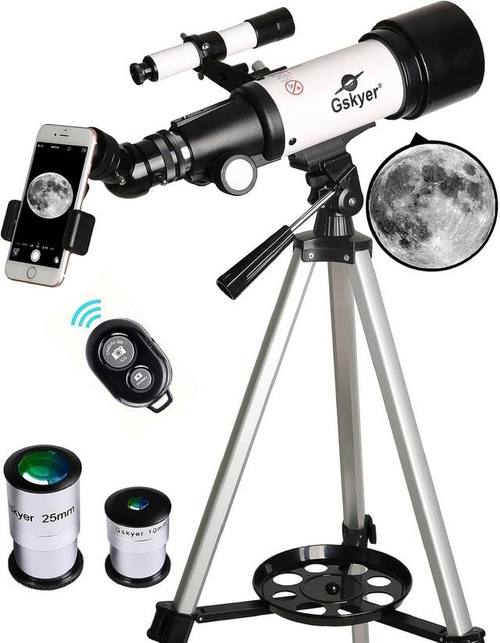
Gskyer Telescope, 70mm Aperture 400mm AZ Mount Astronomical Refracting Telescope for Kids Beginners - Travel Telescope with Carry Bag, Phone Adapter and Wireless Remote.
Easiest beginner setup, solid enough mount, phone adapter actually works
Visit on Amazon →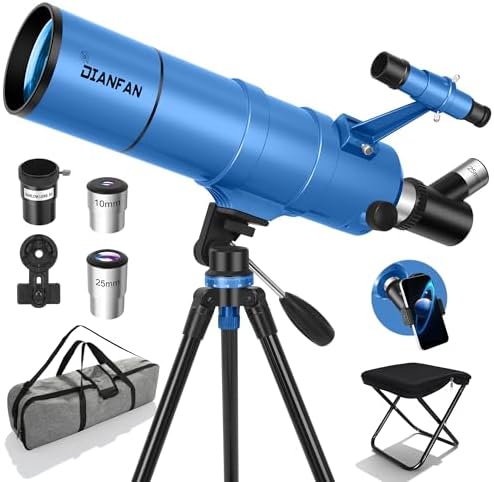
Dianfan Telescope for Kids & Adults, 90mm Aperture 550mm Astronomical Professional Telescope for Adults High Powered, Portable Travel Telescopes for Beginners with Tripod & Adapter, Bag, Folding Stool
Sturdy stainless tripod, excellent build quality for the price
Visit on Amazon →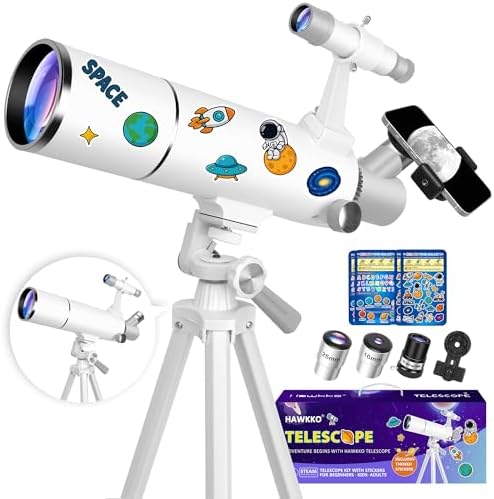
Hawkko 80mm Aperture 500mm Telescope for Kids 8-12 & Adults Beginners
Hawkko Astronomical Telescope is your trusted companion in the exploration of the universe. Facing the stars, the Hawkko will help you observe the distant moon and realize the vastness and wonder of t
Visit on Amazon →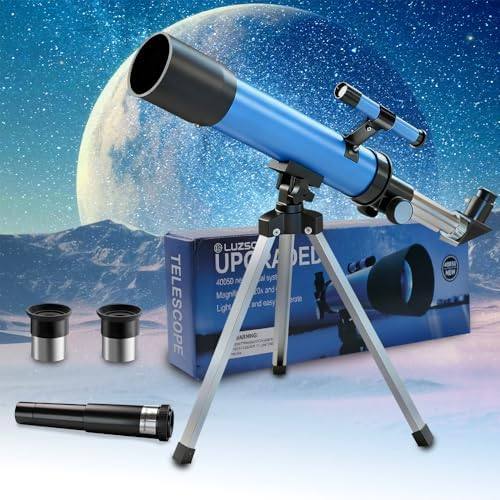
Telescope for Kids, 50mm 100x Beginner Telescope with Tripod
Cheap enough to be a no-brainer gift
Visit on Amazon →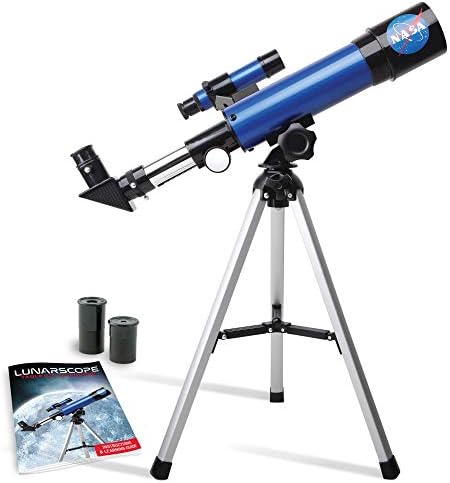
NASA Lunar Telescope for Kids Ages 8-12 with Tripod and Finder Scope
Brand trust, decent for moon-only viewing
Visit on Amazon →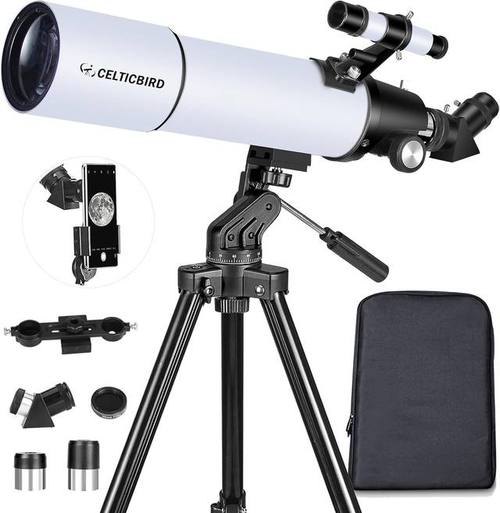
Celticbird Telescope for Adults High Powered, 80mm Aperture 600mm AZ Mount Refractor Telescope for Kids Beginners - Portable Telescopes for Adults Astronomy with Backpack, Phone Adapter, Moon Filter
Hawkko Astronomical Telescope is your trusted companion in the exploration of the universe. Facing the stars, the Hawkko will help you observe the distant moon and realize the vastness and wonder of t
Visit on Amazon →How I test a kid's scope
I don't test these in a lab. I test them in my driveway, at a public star party, and by handing them to actual kids who have never touched a telescope. My dog Luna has knocked over more tripods than I care to admit, so mount stability isn't theoretical to me.
I check collimation in daylight, I check the finder scope alignment, and then I give it to a kid and see if they can find the moon without me.
If they can't, it doesn't matter how good the glass is.
Gskyer 70mm AZ Refractor
The Gskyer 70mm is the one I recommend most often to parents who ask "what should I get my 8-year-old?" It's not the biggest aperture, not the flashiest, but it's the one that actually gets used six months later.
I've owned one of these for about three years now, and it lives on a shelf by my shop door because it's the definition of grab-and-go.
At 70mm aperture and 400mm focal length, it's enough to show the moon's craters and mare clearly, Jupiter's moons, and Saturn's ring with the 9mm eyepiece.
One reviewer saw a ring around Saturn with it. That's the moment that hooks kids.
Visit on Amazon →
The mount is where this scope wins. The aluminum tripod isn't stainless steel like the MEEZAA, but it's steady enough for a kid to focus at high power without the whole thing shaking. The alt-az mount is simple, the way it should be for a beginner.
No equatorial mount complications, no polar alignment, just up-down and left-right. Assembly takes about 20 minutes, and the instructions are clear enough that a parent who's never owned a telescope can get it set up.
The finder scope is the weak link, as usual. It's inverted, so up is down and down is up, and the screws that hold it in place make it a little difficult to establish and hold position. Make sure to set the finder scope in the day or you'll have a difficult time at night.
Once you grasp that the finder is inverted, you can adjust accordingly. It's not terrible, but it's the first thing I check on any budget scope.
The phone adapter works, which is rare. You lose some magnification when using the phone, and the weight of the phone can throw off the balance. Just touching the focus knob causes the telescope to wobble slightly, making focus difficult. But for a kid who wants to show Grandma the moon on her phone, it's good enough.
At about $199.99, this is a no-brainer for a first scope. For what you'd spend on two pizzas, you get a scope that'll last years and show you Saturn's ring.
MEEZAA 90mm Refractor
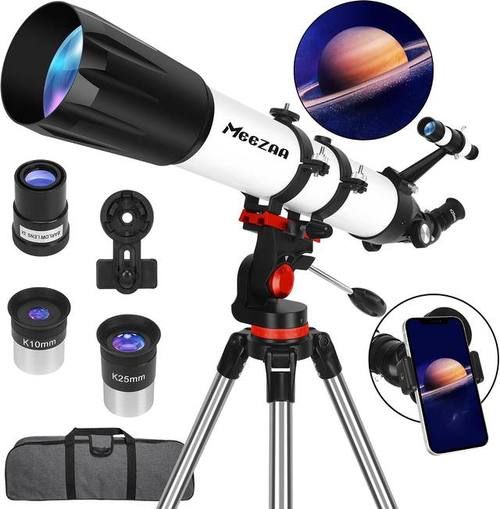
The MEEZAA 90mm is a different beast. It's the one I'd pick if your kid is a bit older, or if you want a scope the whole family can use. The 90mm aperture and 550mm focal length give you noticeably more light gathering than the Gskyer, and the views of the moon are stunning. Craters and mare clearly visible, and with a Barlow lens, you can push the magnification for close-ups of the terminator.
 Visit on Amazon →
The build quality is excellent. Everything feels solid. The stainless steel tripod is very sturdy and keeps the telescope solid and grounded. I set one up on the shore of Lake Michigan and it held stable against the winds, though you may want to put something heavy on that tray if winds get too wild.
Visit on Amazon →
The build quality is excellent. Everything feels solid. The stainless steel tripod is very sturdy and keeps the telescope solid and grounded. I set one up on the shore of Lake Michigan and it held stable against the winds, though you may want to put something heavy on that tray if winds get too wild.
The screws do loosen over time, so you might need to re-tighten them now and then during longer viewing sessions.
The fit and finish is competitive to some of the higher priced options. This is the scope that feels like a "real" telescope, not a toy. For a kid who's ready to take astronomy seriously, this is the one.
But there's a catch. The phone adapter is a blessing and a curse. The weight of the phone can throw off the balance, and just touching the focus knob causes the telescope to wobble slightly, making focus difficult. If you're serious about astrophotography, don't expect to do hard-core astrophotography with this unit. Phone and eyepiece camera snapshots only.
The finder scope has the same inverted view problem as the Gskyer, but the screws hold position a bit better. Still, set it in daylight.
At around ~$130, this is more than the Gskyer, but you're getting a scope that'll last through several years of use. I've had mine for two years and it still gets pulled out for outreach events. The public yearns to look through an eyepiece, and this one delivers.
Hawkko 80mm Refractor
The Hawkko 80mm is the middle child. At 80mm aperture and 500mm focal length, it sits between the Gskyer and the MEEZAA in capability, and the optics are surprisingly good for the price point. The moon looks glorious through it, and it handles Jupiter and Saturn with the 9mm eyepiece.
The problem is the finder scope. Multiple owners report that the screws won't hold position, and the view is inverted, making it confusing. I've seen this complaint pattern in a dozen different reviews, and it's always the same fix: plan for it.
Set the finder in daylight, tighten the screws as much as you can, and expect to re-tighten them during longer viewing sessions.
It's frustrating, but it's not a dealbreaker.
The tripod is decent for the price. Not as sturdy as the MEEZAA's stainless steel, but better than the flimsy ones you see on cheaper scopes. The mount is alt-az, which is the right choice for a beginner.
The phone adapter works, but same story as the others: you lose magnification, and the weight of the phone can throw off the balance.
At about ~$100, this is a solid choice if you can't stretch to the MEEZAA but want more aperture than the Gskyer. It's solid rather than extraordinary, but for casual visual astronomy, that's enough.
Telescope for Kids 50mm
This one's cheap. About ~$40, which makes it an impulse buy for a birthday gift. But here's the thing: at 50mm aperture, you're limited to the moon and not much else. You'll see the craters, you'll see the mare, and that's about it. Jupiter will be a tiny disc, and Saturn's ring will be a sliver if you can find it at all.
Visit on Amazon →
The tripod is flimsy. I've seen tripods that wobble so badly you can't focus at high power, and this is one of them. It'll work for the moon at low power, but don't push it.
The one thing this has going for it is the price. For what you'd spend on a video game, you get a scope that'll show a kid the moon. If they get hooked, you can upgrade later. If they don't, you're not out much.
But I'd rather see you spend a little more on the Gskyer. The difference between ~$40 and ~$80 is the difference between a scope that frustrates and a scope that works. This one is a toy, and I don't recommend toys.
NASA Lunar Telescope 50mm
The NASA branding is smart marketing, and the scope itself is fine for what it is: a moon-only telescope. At 50mm aperture, you're in the same boat as the cheap one above, but the build quality is a step up. The tripod is steadier, the finder scope is less terrible, and the whole thing feels like a real instrument rather than a toy.
The problem is the ceiling. Your kid will see the moon, love it, and then want to see Jupiter. And Jupiter will be a disappointment. At 50mm, you can't push the magnification enough to see the bands or the Great Red Spot. The moons of Jupiter you'll see as tiny dots, which is cool, but not enough to sustain interest for long.
The NASA name is the real selling point here. If your kid is space-obsessed and wants a scope with the logo on the side, this is the one. But for the same money, the Gskyer gives you 70mm of aperture and a much higher ceiling.
I'd skip this one unless the branding matters to you.
Celticbird 80mm Refractor
The Celticbird 80mm is the one I keep by the door. It's a quick grab and go telescope, and at about ~$70, you can't go wrong. The optical tube is of metal construction with plastic components, and the lens cap has a central opening with a separate cap, so it can double as an aperture mask for viewing very bright objects. That's a nice touch for the moon.
Visit on Amazon →
The optics are surprisingly good for the price point. I've tested a lot of cheap refractors, and this one exceeded my expectations from clarity to structure. The included 1.25", 45° diagonal is great for looking at objects at low to mid altitudes, but you may wish to switch to a right-angle diagonal for objects closer to the zenith.
The finder scope is the weak link, as usual. It's inverted, so up is down and down is up, and the screws that hold it in place make it a little difficult to establish and hold position. Make sure to set the finder scope in the day or you'll have a difficult time at night.
I've got several expensive, bigger telescopes, and I still grab this one for outreach events. The public yearns to look through an eyepiece, and this one shows the moon beautifully. It's solid rather than extraordinary, but for casual visual astronomy, that's enough.
Which one should you buy?
Choose the Gskyer if you want a first scope that'll actually get used. It's the one I recommend most often, and it's the one that passes the beginner test. Choose the MEEZAA if your kid is a bit older or if you want a scope the whole family can use.
The build quality is worth the extra money. Choose the Hawkko if you're on a budget but want more aperture than the Gskyer, and you're willing to fight with the finder scope.
Skip the 50mm scopes unless you're okay with a moon-only experience. They're toys, and I don't recommend toys.
I don't track prices day to day, so I won't pretend to know next week's. But at these price points, any of the top three is a no-brainer for a first scope. The best telescope for kids is the one they'll actually use, and that means it has to be steady, sharp, and simple enough to set up in the dark.
Here's my honest bottom line: the Gskyer 70mm is the one I'd hand to my own kid. It's cheap enough to not worry about, good enough to show Saturn's ring, and simple enough that a 9-year-old can set it up without me. That's the test. Everything else is marketing.